Notice: Trying to get property 'ID' of non-object in /home/clauzesu/domains/clauz.org/public_html/wp-content/plugins/elementor/core/base/document.php on line 356
Notice: Trying to get property 'ID' of non-object in /home/clauzesu/domains/clauz.org/public_html/wp-content/plugins/elementor/core/base/document.php on line 356 Conductivity Sensor K-1 - clauzSkip to content
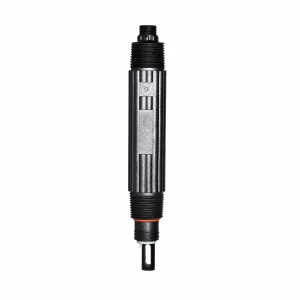
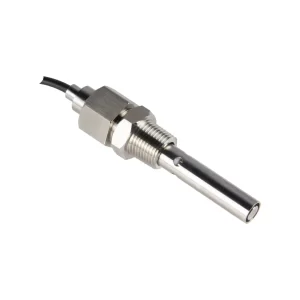
Conductivity indicates the ability of an aqueous solution to conduct electric current and is often used to indicate the purity of water. The conductivity of pure water is very small. When the water contains inorganic acids, alkalis, salts or organic charged colloids, the conductivity increases. Conductivity is often used to indirectly estimate the total concentration of charged species in water. Sewage conductivity refers to the conductivity of sewage and is one of the indicators reflecting the concentration of dissolved ions in sewage. In water quality monitoring stations, this parameter is very critical because it can directly reflect the operation effect of sewage plant treatment and the overall level of the urban ecological environment. Usually the conductivity range of sewage is between 0 and 2000 μS/cm. The ASCK-1 online Conductivity Sensor developed and produced by Daruifuno is made of 316L stainless steel and can monitor the conductivity value of water quality in real time. Matched with the AEC1-T series conductivity controller, it can also display TDS, resistivity and salinity values.
Features
K constant is 1, the measuring range is 5~2000μS/cm
Built-in PT1000 temperature sensor can perform temperature compensation
The cable length is 10 meters. The cable length of the conductivity probe can be customized.
1/2” NPT mounting thread for easy installation